
Unstitched vs Stitched Suits: Which One Should You Buy
23 August 2026 · 6 min read
You open two product pages. Same lawn print, same colour. One costs half as much. One says unstitched. The other says stitched. Eid is three weeks away and you need to choose now.
Most buyers pick on price alone. Then they lose money at the tailor, or receive a stitched suit with sleeves too tight. Both mistakes are avoidable.
This guide compares unstitched vs stitched suits on the four things you care about: total cost, waiting time, fit, and risk. You get real yardage numbers, the questions to ask before checkout, and a 30 second rule for choosing.
Read to the end for the five mistakes we see most often in customer orders.
What an unstitched suit gives you
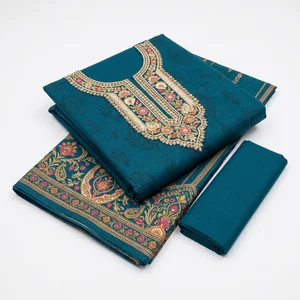
An unstitched suit arrives as fabric. A standard 3 piece includes shirt fabric, trouser fabric, and a dupatta. You take the pieces to a tailor and choose the cut.
- Sleeve length and width
- Neckline shape and depth
- Shirt length
- Trouser style, whether straight, boot cut, or shalwar
Fabric quality is easy to check before stitching. Nothing hides inside a finished seam.
Unstitched pricing sits lower because the labour has not happened yet.
Browse unstitched suitsWhat a stitched suit gives you
A stitched suit arrives ready to wear. You open the parcel and put the dress on.
- Zero tailor visits
- A known delivery date
- No risk of a tailor missing your deadline
The trade off is fit. Standard sizes follow a chart, not your body. Small adjustments still need a tailor, though the work stays minor.
Browse stitched suitsPrice: compare totals, not sticker prices
Unstitched total equals fabric price plus stitching charges. Stitched total is one price.
Stitching in Pakistan runs roughly Rs. 1,500 to Rs. 4,000 per suit for everyday designs. Heavy or formal work costs more. Add stitching to the fabric price before you compare anything.
A worked example. An unstitched suit at Rs. 3,500 plus Rs. 2,000 stitching comes to Rs. 5,500. A stitched suit at Rs. 5,800 comes to Rs. 5,800. The gap narrows fast.
On simple everyday designs, the two options land close. On heavy formal wear the gap widens, because formal stitching charges climb with the design.
Time: how fast you wear the dress
Stitched suits ship ready. Delivery across Pakistan takes a few days.
Unstitched suits add tailoring time. Plan for one to three weeks. During wedding and Eid season, skilled tailors book out and turnaround stretches further.
Wedding season changes the math
Book your tailor before you buy fabric during peak season. Buyers who reverse the order end up holding fabric with no slot.
If your event falls under two weeks away, choose stitched or ready to dispatch.
See ready to dispatch piecesFit and sizing: where buyers lose money
Fit drives most returns in Pakistani fashion.
Unstitched removes sizing risk. Your tailor works from your measurements.
Stitched carries sizing risk. Read the size chart before you order, and measure yourself rather than guessing from a shirt you already own.
Measure before you order
Take four measurements: bust, waist, hips, and shirt length. Compare them against the chart on the product page.
If you sit between two sizes, order the larger one. Taking a suit in costs less than letting one out.
Check the full size guideHow to choose in 30 seconds
Answer three questions.
- Do you have more than two weeks before your event? If no, buy stitched.
- Do you have a tailor you trust? If no, buy stitched.
- Do you want a specific cut or an unusual neckline? If yes, buy unstitched.
Two answers pointing to stitched means buy stitched. The rule holds for most orders.
Five mistakes to avoid
- Comparing fabric price against a stitched price. Add stitching charges first.
- Buying fabric during Eid week without a confirmed tailor slot.
- Skipping the size chart because you know your size in another brand. Charts differ between brands.
- Ordering 2 piece fabric when your design needs a dupatta. Check the yardage listed on the product page.
- Choosing lawn for a winter event. Match the fabric to the season.
Frequently asked questions
Is unstitched cheaper than stitched?
Fabric costs less upfront. After stitching charges, totals often land within a few hundred rupees for everyday designs.
How much fabric does a 3 piece suit need?
Around 2.5 to 3 yards for the shirt, 2.5 yards for the trouser, and 2.5 yards for the dupatta. Product pages list exact yardage.
How long does stitching take in Pakistan?
One to three weeks for everyday designs. Longer during Eid and wedding season.
What if a stitched suit does not fit?
Minor alterations solve most fit issues at low cost. Read the returns policy before you order.
Which option works better for a wedding?
Unstitched if you have four weeks and a skilled tailor. Stitched or ready to dispatch if the date sits close.
Do you deliver across Pakistan?
Yes, with Cash on Delivery. Delivery timelines and charges are on the shipping information page.
Unstitched suits win on control and on heavy formal wear. Stitched suits win on speed and on certainty. Your deadline decides more than your budget does.
Short on time, buy stitched. Want a specific cut, buy unstitched.
Shop both, with Cash on Delivery across Pakistan
Shop now